ServicesWhole-Home Filtration
Whole-Home Filtration in Buckeye
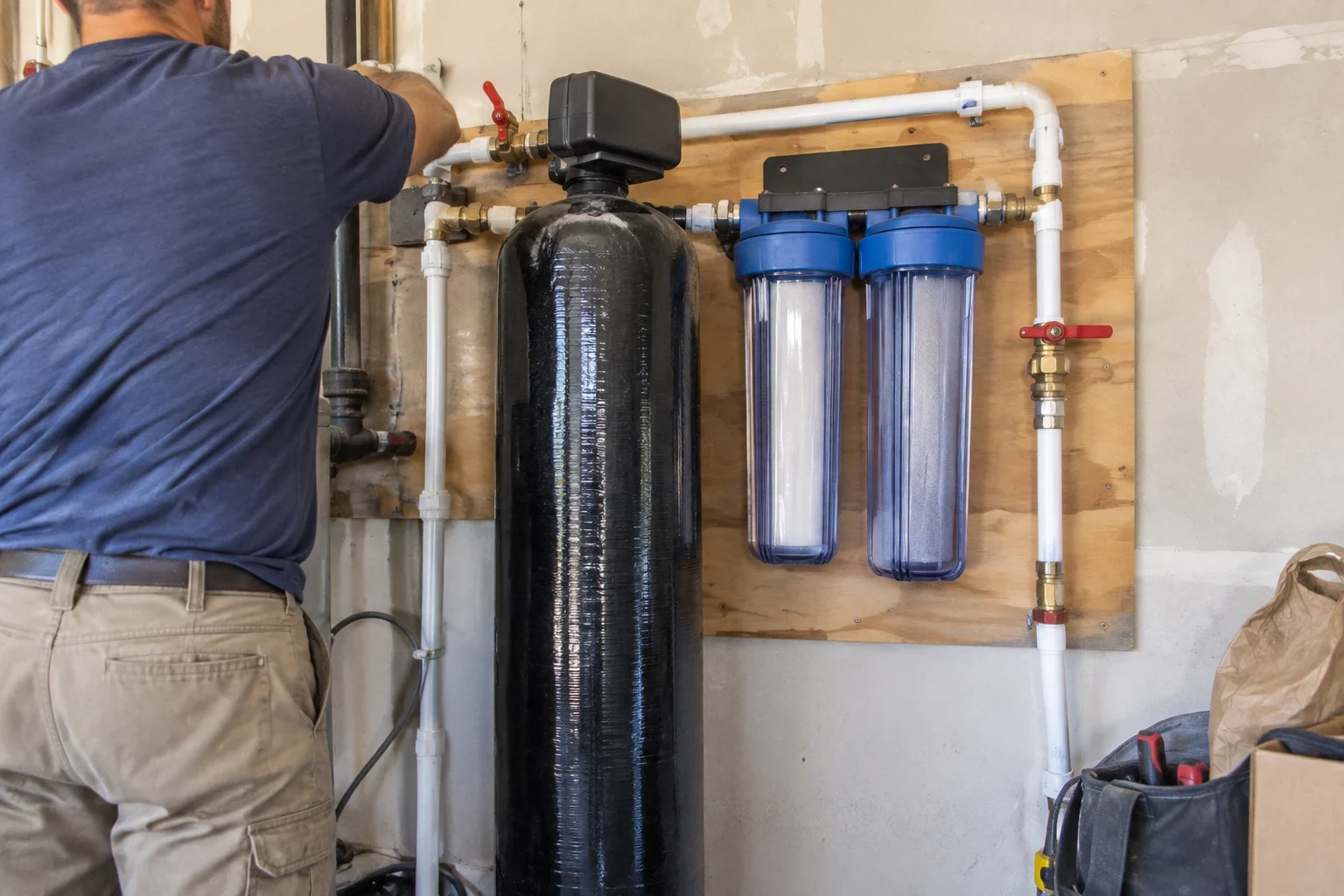
We put a carbon filter on your main water line so the water at every tap, shower and appliance comes through without that chlorine taste and smell. We cover the floors, keep the yard tidy and tell you what we're doing before we shut anything off.
What a whole-home filter does for your house
The city adds a disinfectant, chlorine or chloramine, so the water stays clean through miles of pipe. It does its job. The trouble is the taste in your morning coffee and the smell that fills the bathroom during a hot shower. A whole-home filter goes on the line where water comes into your home, so it's cleaned up before any faucet sees it.
Most systems we put in use a tank filled with activated carbon. As water passes through, the carbon holds on to chlorine along with many of the compounds behind odd tastes and smells. Your pressure stays where it was. The difference shows up at the kitchen sink, in the showers and in the laundry.
Here's something worth knowing before you decide. Carbon leaves hardness alone. White buildup on faucets and spots on dishes come from minerals, and that's a job for a water softener. Plenty of West Valley homes have both, with the filter placed ahead of the softener. We'll give you a straight answer on which one your water needs.
What's included in the install
- 01
A tank that fits your home
We pick the tank size by counting your bathrooms and asking how many taps tend to run at once. An undersized tank chokes your shower pressure. An oversized one means paying for carbon that just sits there.
- 02
A bypass for easy service
Every system we install gets a bypass. When the filter needs work, one turn of a handle sends plain water to the house so nobody goes without.
- 03
Solid tie-in to your main
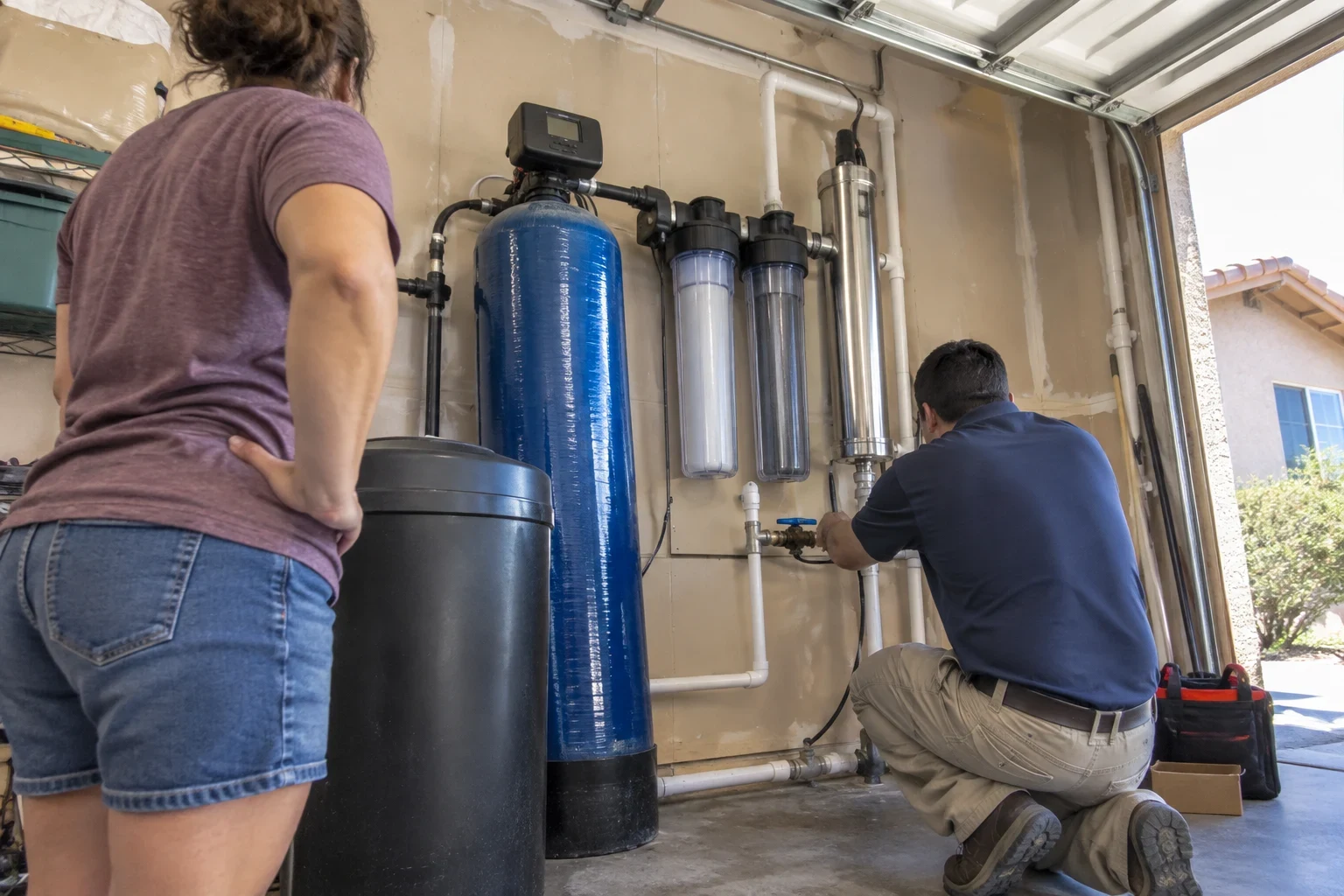
We connect at the existing loop or main line, usually in the garage or on an outside wall. Each fitting gets tightened and checked until it stays dry before we pack up.
- 04
Covers inside, care outside
Drop cloths go on any floor in our path, and we put on shoe covers before stepping inside. In the yard we move rock, plants and drip tubing with care and set them back the way we found them.
- 05
Carbon flush and a quick lesson
New carbon gives off a fine black dust, so we rinse it out before water reaches your fixtures. Then we show you the bypass, the shutoff and the simple upkeep.
Questions about Whole-Home Filtration?
Call(623) 278-8762Signs a whole-home filter makes sense
Your shower smells like chlorine
A pool smell that gets stronger in a hot shower is the top reason people ask us about filtration.
Your coffee or tea tastes wrong
When drinks made from tap water come out flat or chemical-tasting, the disinfectant is usually to blame. Carbon removes most of it.
One filtered tap isn't enough
Pitcher and fridge filters only treat one spot. A whole-home system reaches the showers, sinks and laundry as well.
Showers leave skin or hair dry
Some people feel this more than others. Removing chlorine is an easy step that helps a lot of them.
A softener is already on your list
If water softener installation is already planned, adding a carbon filter in front of it fits easily into the same visit and keeps chlorine away from the softener resin.
From first call to clean water
- 1
We start on the phone
Tell us what's bugging you about your water and how your home is set up. We'll be clear about what a filter can fix and what it can't, and you get your quote by phone.
- 2
A look at the plumbing
We find where the main enters, check for an existing loop and measure the space. Before anything gets cut, you'll know exactly where the tank will sit.
- 3
The install
Floor covers go down first. We let everyone in the house know before the water goes off, and we keep it off for as little time as we can. Most jobs wrap up in part of a day.
- 4
Final checks and cleanup
We rinse the new carbon, look over each joint for leaks and turn the water back on. We haul away old parts, boxes and covers, then show you how the system works.
What moves the price
No two plumbing setups are quite alike, so we price your job once we've heard how your home is laid out. We'll explain each part of the number in plain terms. If we open things up and find something we didn't expect, you hear about it and decide before we go further.
- How big the system is
- A home with more bathrooms and heavier water use needs a larger tank holding more carbon.
- Which carbon goes in the tank
- Regular activated carbon does a good job on chlorine. If your water is treated with chloramine, catalytic carbon works better, and it runs higher.
- Getting to the main line
- A ready-made loop in the garage means a quick tie-in. Running new pipe or squeezing into a cramped spot takes more hours and more parts.
- Adding other equipment
- Pairing the filter with a softener or putting a sediment pre-filter in front of it adds to the parts list. Doing it all in one visit keeps you from paying for a second trip.
Whole-home filtration questions
Does a carbon filter soften water too?
It doesn't. Carbon pulls out chlorine and a lot of taste and smell issues, but the minerals that cause hardness pass right through. For scale and spotting, a water softener is the fix. We can put both in on the same day.
Will my showers lose pressure?
They shouldn't, as long as the tank fits the house. We ask how many bathrooms you have and how your family uses water before we choose a size. Weak showers after a filter install almost always trace back to a tank that's too small.
When does the carbon get replaced?
That comes down to how big the tank is and how much water your household runs through it. A lot of carbon tanks go several years between changes. At the walkthrough we'll give you a realistic idea for your setup.
Should I add a drinking water system as well?
That's up to you. The whole-home filter makes water taste better at every faucet. A reverse osmosis system under the kitchen sink takes it a step further for drinking and cooking. Lots of families find the whole-home filter is all they want.
How do you keep the house and yard clean?
We cover every floor we walk across and put on shoe covers at the door. Outside, we keep rock, plants and drip lines where they belong. When we flush the new carbon, the water goes to a drain or a spot away from your landscaping.
Does someone need to be home while you work?
It helps to have someone there when we arrive and when we finish. That way we can agree on where the tank goes and show you how to run it. We'll give you a heads-up before the water shuts off and again when it's back on.
Ready for better-tasting water at every tap
Tell us what's going on with your water and how your home is set up. We'll give you a straight answer on whether a filter, a softener or both makes sense.