ServicesWater Softener Installation
Water Softener Installation in Buckeye
We install water softeners sized to how your home uses water. We cover the floor and the path from the driveway, tie into your plumbing cleanly, and walk you through the settings before we go. You know what we are doing at each step.
Is a water softener the right fix?
Calcium and magnesium ride along in hard water. Heat it or let it dry and those minerals stay behind as scale. You see it as crusty faucets and spotted glassware, and you don't see it building up inside the water heater, where it cuts the tank's life short. Hard water is the norm across the West Valley, so few homes escape it.
A softener pulls those minerals out before water gets to your taps and appliances. If scale is what bugs you, it is the fix. If the bigger gripe is a chlorine taste or smell, whole-home filtration may be the better choice, and some homes end up with both.
Call and tell us what you are seeing. We will point you to the one that fits, and if you don't need a softener, we will tell you that too.
What comes with the install
- A unit sized for your household
- We ask how many people are home, how many bathrooms you have and roughly how much water you go through. Too small a softener regenerates over and over and eats salt. Too large a one costs you more than it should.
- Covered floors and a clear path
- Before we unpack a single tool, drop cloths go down in the garage or utility room. Runners go down if we need to walk through the house. We carry gear around your gravel and plants, not through them.
- Connection to your loop
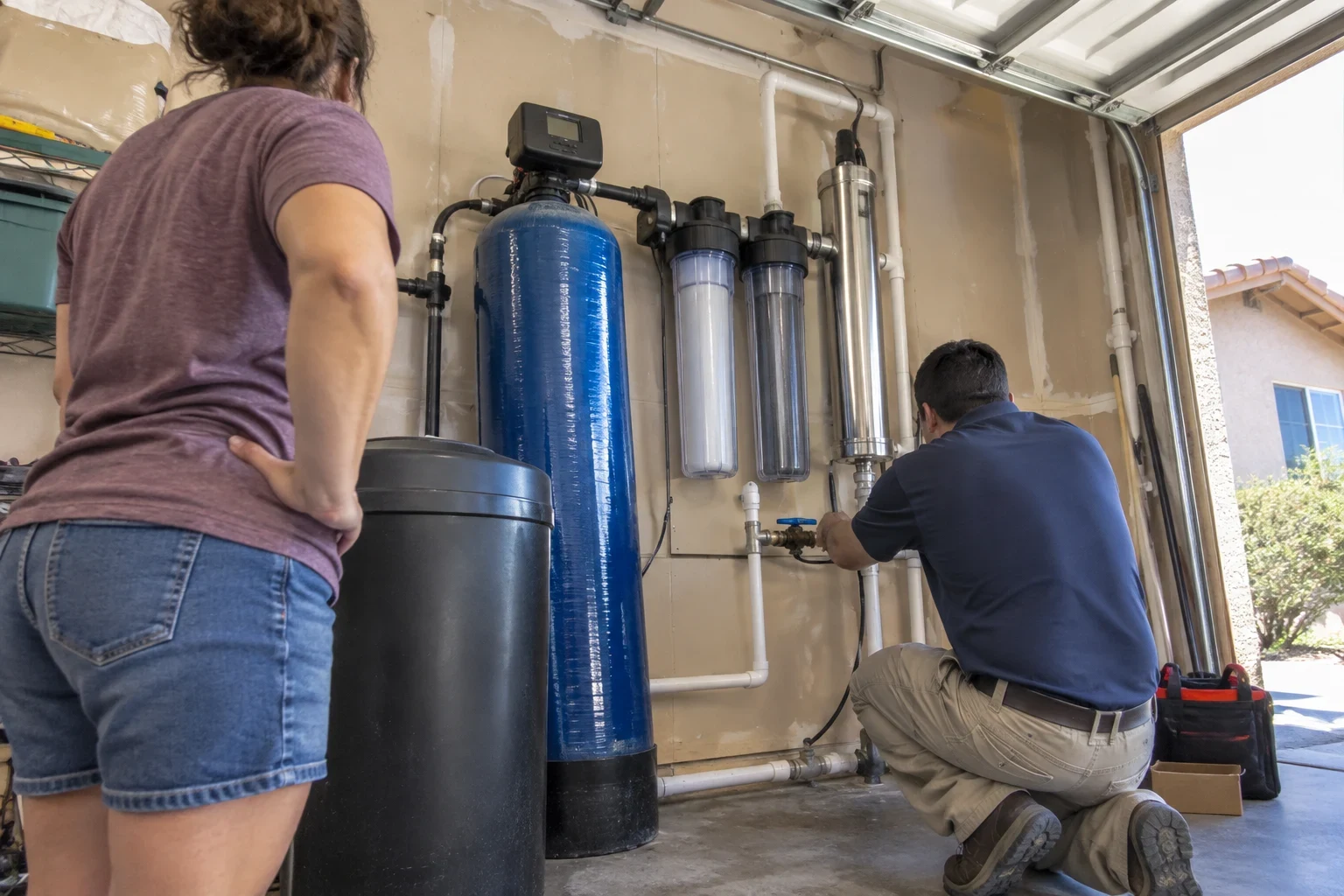
- Plenty of newer homes in the area come with a softener loop already in the garage. We hook into it with a bypass valve. That way you can take the softener off line and the house still has water.
- Drain line and power
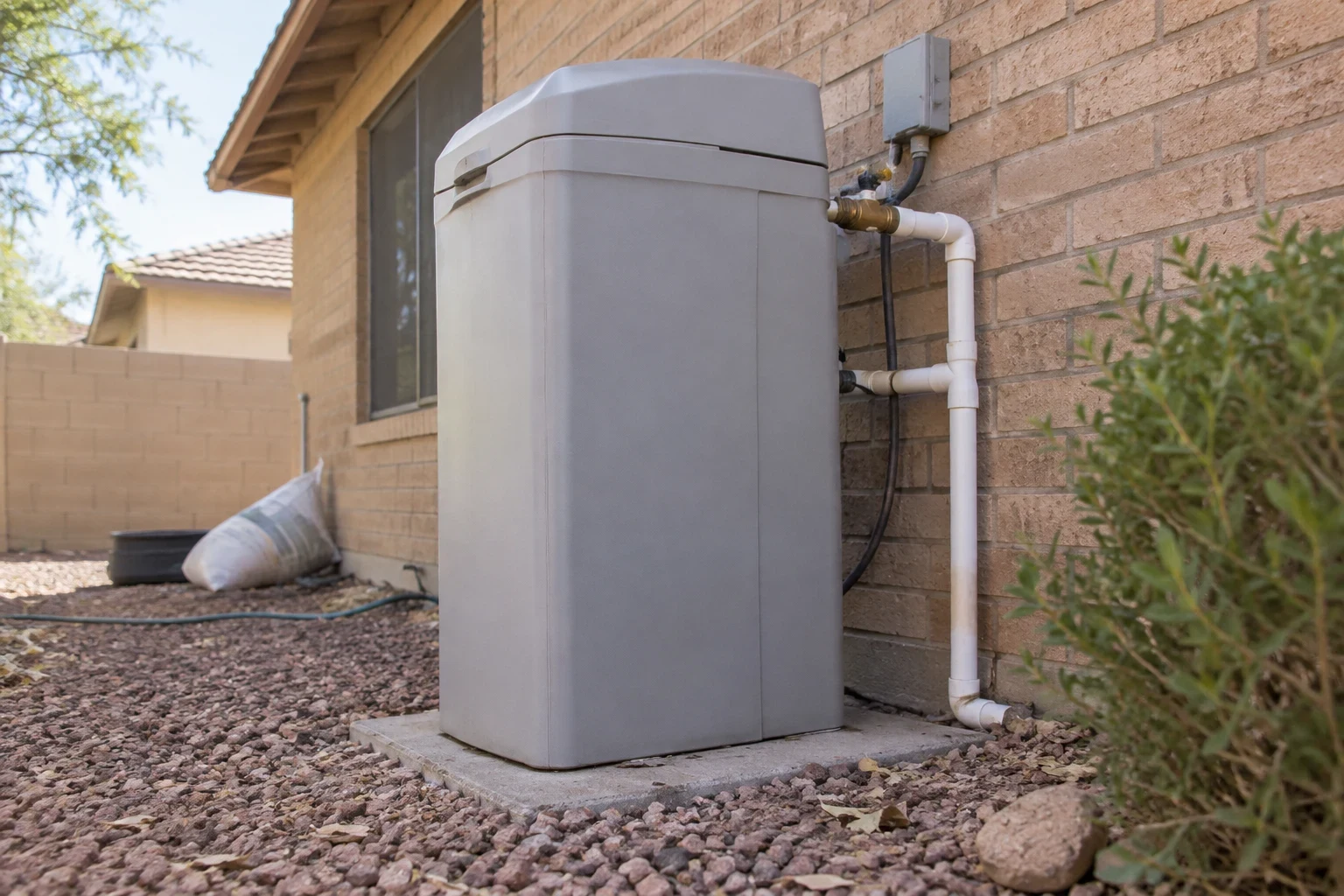
- A softener sends rinse water to a drain when it regenerates, and it needs an outlet close by. We install the drain line with a proper air gap and keep it tidy against the wall.
- Start-up and settings
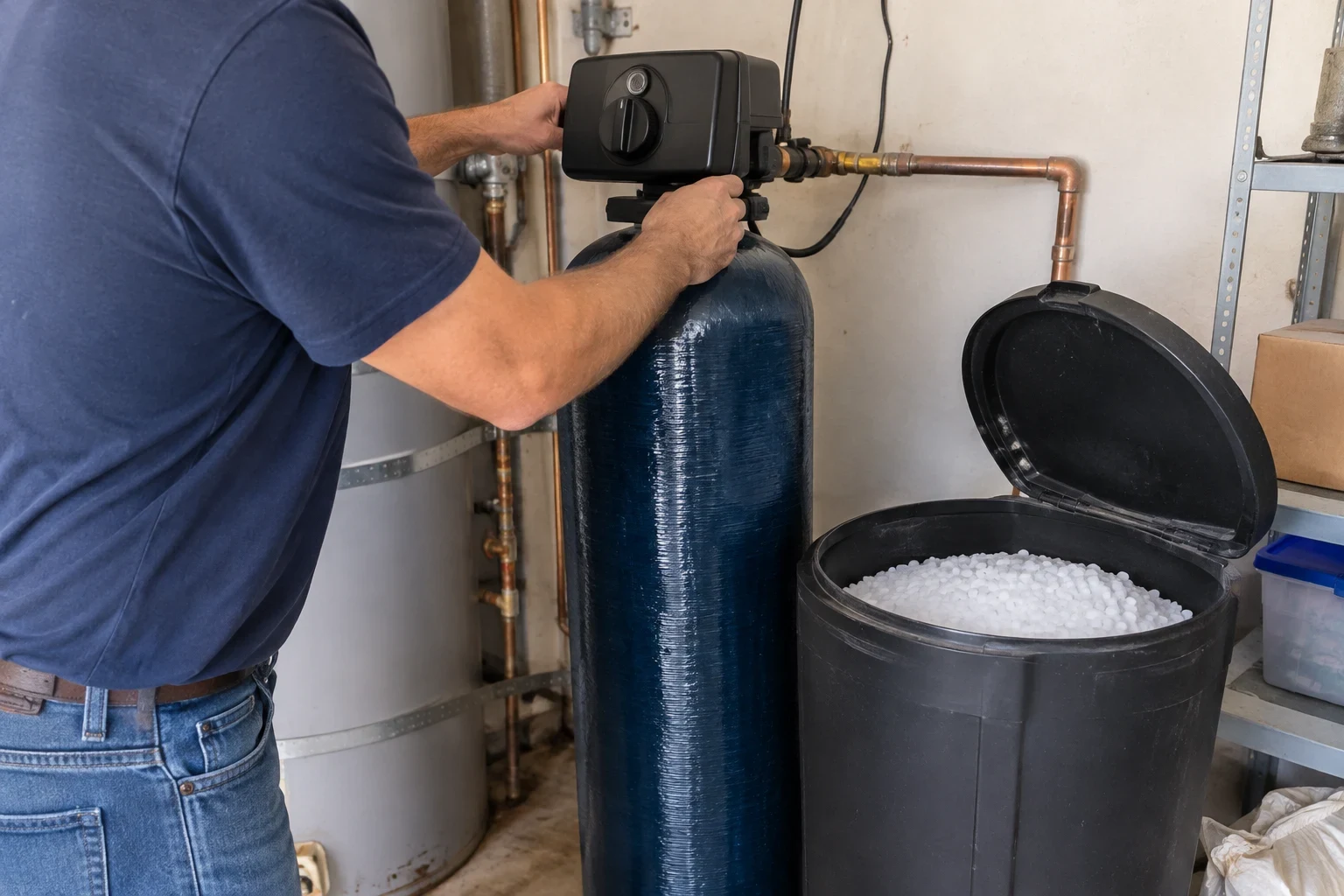
- We add the resin, fill the brine tank, program the hardness and the regeneration time, and run a full cycle. Every joint gets checked for drips before we call it done.
- Haul-off and a quick lesson
- Boxes, wrap and any old unit leave with us. Then we walk you through topping off the brine tank, flipping the bypass when you need to and what the display on the control head is telling you.
Signs your home needs a softener
Buildup that won't stay gone
Chalky white deposits form on aerators, shower heads and glass shower doors. When it returns a few days after you scrub it off, your water is the cause.
Spotty glassware
Dishes leave the dishwasher with spots or a dull haze, even though rinse aid is in the machine.
A noisy water heater
Knocking or popping in the tank often comes from mineral sediment settled at the bottom. That layer separates the burner or element from the water, so heating the same amount takes more time and energy.
Soap won't lather
Hard water minerals work against soap and shampoo. You end up using more of each, and skin and hair still feel coated.
An old softener on its last legs
Your current unit may go through salt quickly, drip at the valve or no longer soften at all. Replacing it is often easier than hunting for parts for an older model.
What sets the cost of your install
No two setups are quite alike, so we work out the price once we know about your home. On the phone we go through the cost and what it covers before anything goes on the calendar. If we find something different when we get there, you hear about it before we touch it.
Capacity and control head
More people in the house means a unit with more capacity. A metered control head that regenerates by actual use costs more at the start, but it usually burns less salt over time.
A loop or no loop
When the plumbing is already stubbed out for a softener, the job is simple. Without that, we run new pipe off the main line, and that means more parts and more hours.
Getting to a drain and an outlet
The softener needs both close by. If neither is near the loop, we run them, and the distance and the wall surfaces along the way change the work.
Taking out the old one
Disconnecting and hauling off a softener you already have adds some time. It adds more if the old bypass or fittings are worn and need to be swapped.
How the day goes
- 1
We call before we arrive
You get a call when we are on the way. At the door we confirm where the unit goes and what we will touch.
- 2
We protect the space
Floors get covered first. We shut off the water at the main and let you know how long it will be off, usually a short part of the visit.
- 3
We set and connect
The tanks go in place, level and close to the drain. We connect to the loop, add the bypass and run the drain line.
- 4
We start it up and test
Water goes back on, we check for leaks and run a regeneration. We set the controls to your home's use.
- 5
We clean up and explain
Covers come up, debris goes in our truck, and we show you the unit. You know what to do before we pull out of the driveway.
Questions about softener installs
How long is the install visit?
With a softener loop already in place, expect a few hours. New plumbing or a drain line adds time. We give you an estimate by phone, and if the day changes, we tell you right away.
My garage has no softener loop. Can you still do it?
Yes. We connect to the main line where it comes into the house, most often in the garage, and build a loop with a bypass valve. That takes longer than using an existing loop. We show you the route of the new line before we cut any pipe.
Can I drink softened water?
Softened water carries a little added sodium. Most people drink it with no issue. If you're limiting sodium or want better-tasting drinking water, many homes add a reverse osmosis system under the kitchen sink.
How often does the salt need topping up?
That depends on the unit's size and your household's daily water use. Plenty of homes refill the brine tank every one to two months. If carrying heavy bags wears on you, our automated salt delivery brings salt on a set schedule.
Why does the water feel slippery now?
That's normal. Soap rinses away differently in soft water, which leaves your skin feeling smoother, not coated. Most people get used to it within a week or two.
Do you work outside Buckeye?
Yes. We also install in nearby towns such as Goodyear, Litchfield Park, Avondale and Surprise. Let us know your location when you call and we'll confirm.
Time to get rid of the scale?
Let us know about your house and your water, and we'll tell you which softener size fits and how the install will go. You'll have the plan before we arrive.