ServicesReverse Osmosis System
Reverse Osmosis Systems for Buckeye Kitchens
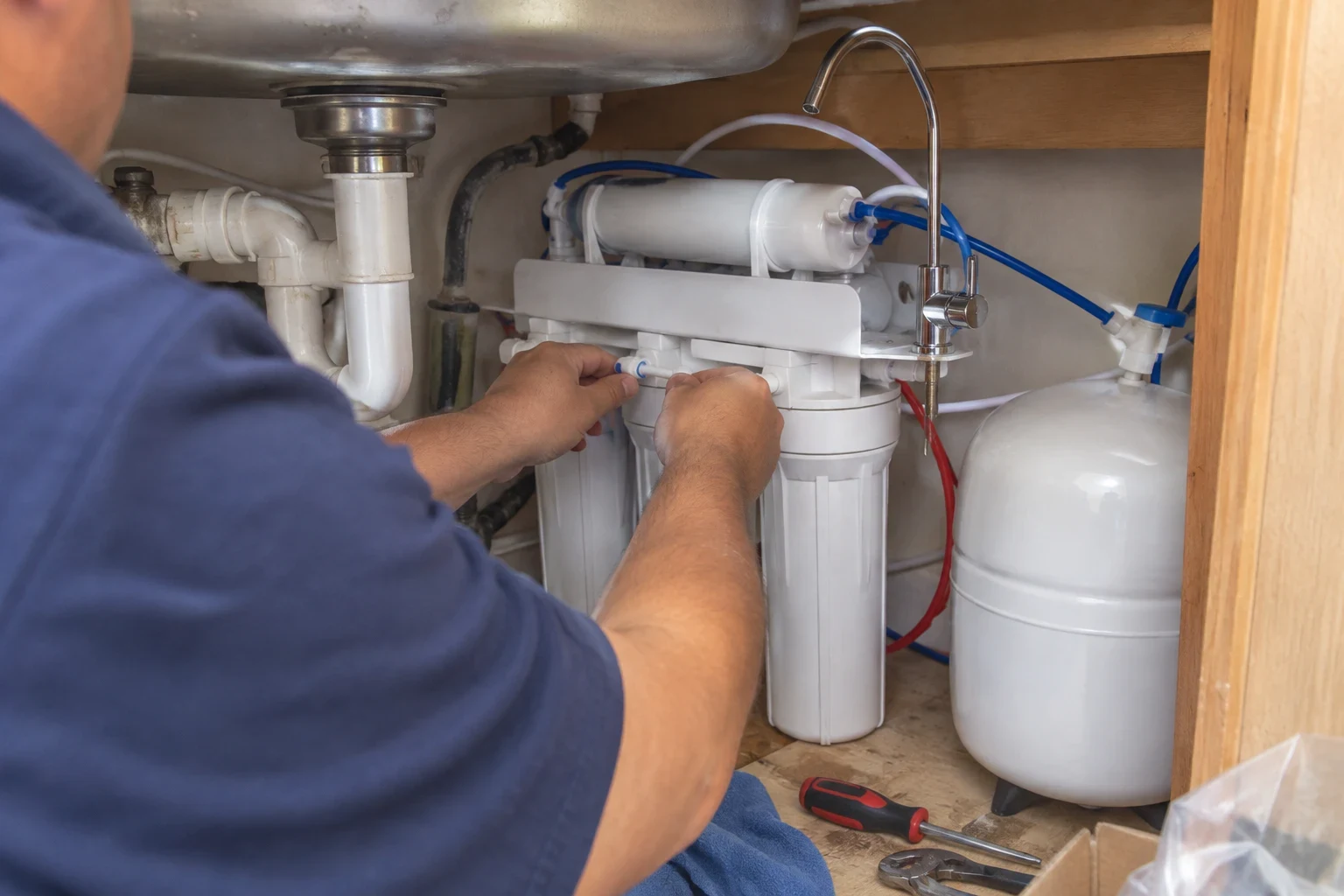
An under-sink reverse osmosis system puts clean-tasting water at your kitchen for drinking, coffee and cooking. Our crew covers your floor and counter, keeps the work tidy inside the cabinet, and explains each step as we go, so nothing about the visit surprises you.
How Reverse Osmosis Works at Your Sink
Inside the unit, water is pushed against a very fine membrane. Most of the dissolved salts and minerals can't pass through, so they get flushed away to the drain. What comes out of the small faucet at your sink tastes clean and leaves no chalky film in your kettle.
An RO system treats water at one tap, and that is almost always the kitchen sink. Showers, the washer and the bathroom faucets don't change. If you want treated water through your whole home, whole-home filtration or a water softener is the better fit. A lot of families in Buckeye pair the two, with a softener for the house and RO at the kitchen for drinking.
It is worth a look if you carry cases of bottled water home every week, if you don't like how your tap water tastes, or if you already have a softener and pick up a slight salty taste in your drinking water.
What Your Installation Includes
- 01
A check of your sink plumbing
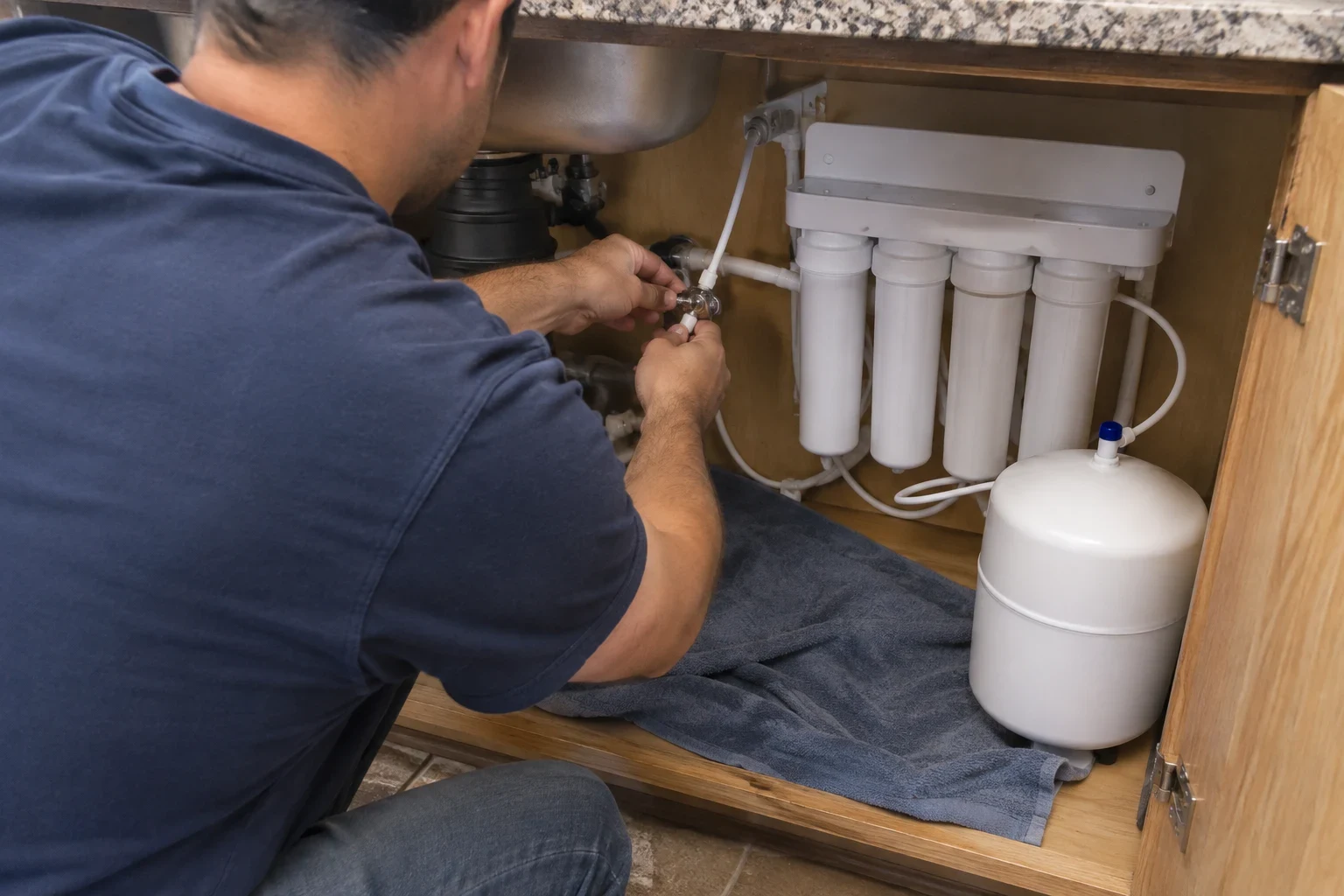
Before mounting anything, we look at the cold line, the drain and the shut-off valve. If the valve is worn or sticks, you hear about it from us first.
- 02
Pre-filters and membrane
Sediment and carbon pre-filters clean the water before it reaches the RO membrane. That early filtering keeps the membrane working longer.
- 03
Tank or tankless setup
With a tank, a small reserve of filtered water sits ready, so the faucet flows evenly. A tankless unit takes up less room. We look at your cabinet and help you choose.
- 04
Its own faucet
The system gets a separate drinking faucet on the sink or counter. We use an open hole if you have one. If you don't, we explain how we will drill before we begin.
- 05
Optional fridge or ice maker line
We can connect your refrigerator to the RO supply, so chilled water and ice come from filtered water too.
- 06
Walkthrough and cleanup
You see where each filter sits and how to swap it out. Then we wipe the cabinet and counter and clean the floor where we worked.
Questions about Reverse Osmosis System?
Call(623) 278-8762Signs an RO System Would Help
You haul bottled water home
Cases of bottles eat up pantry space and grocery money. With RO, that kind of water comes right out of your own faucet.
White crust on the kettle and coffee maker
Heating hard water leaves scale behind quickly. RO water leaves much less.
Cloudy ice cubes
Minerals in the water cloud your ice and can give it an odd taste. Feeding the ice maker from RO usually fixes it.
Softened water tastes a little salty
Softeners trade hardness minerals for sodium, and some people can taste it. RO takes most of that sodium out of the water you drink.
Coffee and tea taste flat
Minerals change how coffee and tea brew. Cleaner water lets the real flavor show up.
How the Install Day Goes
- 1
A phone call to start
You tell us about your kitchen, your sink and what bothers you about the water. We ask about cabinet space, countertop material and whether you want a fridge line.
- 2
We protect the area
We lay drop cloths on the floor in front of the sink and towels inside the cabinet. We empty the cabinet with you and set your things somewhere you choose.
- 3
Mounting and connections
We shut off the cold water, tie the system into the cold line and add a drain connection. We mount the tank and the filter housing so they leave room for your trash can and cleaning supplies. Then we set the faucet.
- 4
Flush and leak check
New filters need to be flushed, and the first tank of water goes down the drain. We check every fitting for drips while it runs and again once the tank fills.
- 5
Walkthrough and cleanup
We show you the filter order and what a filter change looks like. Then we wipe down the cabinet, put your things back if you like and clean up before we go.
What Moves the Price of an RO Install
No two sink cabinets are set up the same, and the space under yours matters as much as the system you pick. We ask about your kitchen before we put a number on anything. Then we go over each option with you by phone, so you know what you are paying for.
- Storage tank versus tankless
- Going tankless frees up cabinet space, but the unit itself runs higher up front. A system with a small tank is the simpler build and suits most kitchens just fine.
- Countertop material
- Drilling laminate for the new faucet goes fast. Granite and quartz take a diamond bit and a slow, careful hand, which adds labor time.
- Fridge and ice maker hookups
- Running filtered water to the refrigerator takes extra tubing and fittings. The farther the fridge sits from the sink, the more work it takes.
- Remineralization stage
- This optional stage adds back a little calcium so the water tastes rounder. It is your call, and passing on it keeps the price down.
- Shut-off valve and drain condition
- A worn valve or a drain that is hard to reach can need attention before the system goes in. We show you what we see and talk it through before we touch it.
Reverse Osmosis Questions We Hear Often
Does an RO system waste water?
Yes, some water goes down the drain while the membrane cleans itself. How much depends on the system and your water pressure. Newer units send less to drain than older ones, and we can go over the numbers for the models we install.
How often do the filters need changing?
Pre-filters usually get changed about once or twice a year, depending on how much water you use. The membrane lasts longer, often a few years. We show you how to change them so you are not stuck waiting on anyone.
Will the RO faucet run as fast as my kitchen tap?
No, it runs slower. With a tank it is steady enough to fill a glass or a pot without much wait. Your main kitchen faucet keeps working just as it did.
Do I need a water softener too?
Not always, but hard water wears out RO filters and the membrane faster. If your water is hard, a water softener protects the RO system and the rest of your plumbing. We can talk about both on the same call.
Can you install it if my cabinet is tight?
Usually, yes. Tankless units and slim tanks fit in smaller spaces. Tell us what is under your sink when you call and we will say plainly if it fits.
Ready for Better Water at the Kitchen Sink
Tell us about your sink, your countertop and what you want from your drinking water. We will walk you through the options and what the install day looks like.